
Who it is for
Allergy-associated sinus disease — central compartment atopic disease, or CCAD — shows up as swelling around the middle turbinates, positive skin-prick or blood tests to dust mite or grass, higher IgE and younger onset. In this group our own data show that allergen immunotherapy after surgery improves control. It is not a treatment for non-allergic, eosinophilic disease.
Options
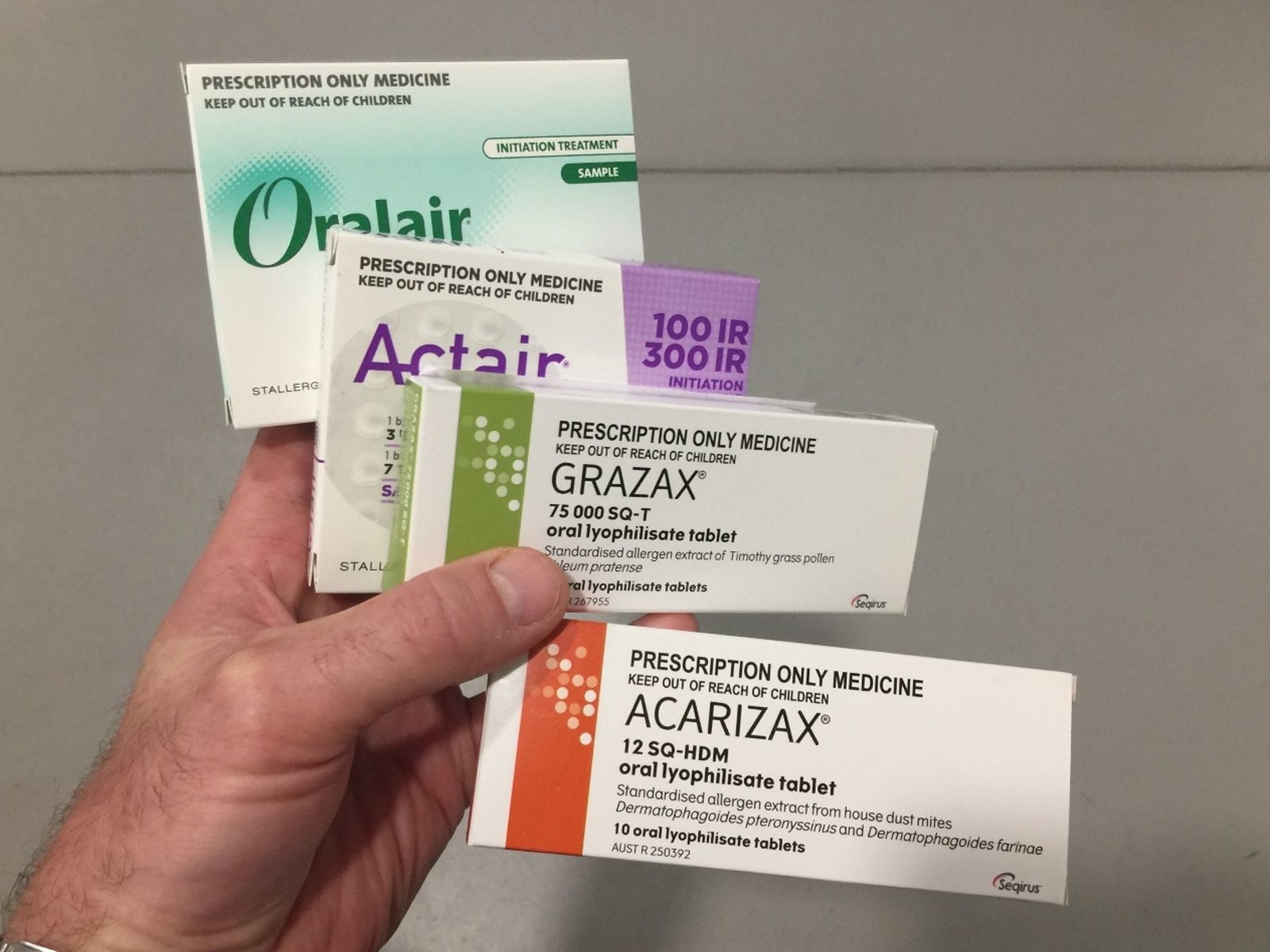
- Dust mite tablets (Acarizax or Actair): one tablet under the tongue daily for about three years. First dose in the clinic, then at home.
- Grass pollen tablets (Oralair, Grazax): started about four months before the pollen season and taken through it, for three seasons.
- Injection immunotherapy: a wider range of allergens including custom mixes; monthly injections in a doctor’s rooms (usually your GP) after a build-up phase, with a short observation period after each.
These medicines need a prescription but are not PBS-subsidised. Indicative costs are on the costs page.
Questions patients ask us
Will immunotherapy cure my polyps?
On its own, no. Combined with surgery and topical corticosteroid in allergy-driven disease, it reduces recurrence and is the group in which long-term remission off treatment is sometimes seen.
Can I take it with a biologic?
Yes. Immunotherapy and a biologic address different parts of the pathway.
How long does it take to work?
Benefit builds over the first year; the full course is three years.
How to access our care
Please see your GP, or the specialist who looks after your asthma or allergies, and ask for a referral to the Rhinology and Skull Base Service. Your doctor sends it to us directly, with the scan and blood-test results we need. Once it arrives, the specialist centre will contact you with an appointment.
Refer a patient
One online referral and the whole plan sits with us — work-up, surgery, biologic initiation and monitoring, public or private. We arrange the FBC with eosinophils and CT sinuses if they have not been done, and the specialist centre contacts the patient with an appointment.
Who treats this

Prof Richard Harvey
Rhinology & skull base surgery
02 9360 4811
Dr Peta Sacks
Rhinology & skull base surgery
02 9101 2510
Rhinology and Skull Base Service, St Vincent’s Hospital Sydney. Both also consult and operate at Macquarie University Hospital.
Clinical content by Prof Richard Harvey and Dr Peta Sacks · Reviewed October 2026