
Biologic medicines for nasal polyps
Biologics are injectable medicines that switch off the type 2 inflammation driving severe nasal polyps — the first treatments that prevent polyps rather than just remove them. Four are registered for nasal polyps in Australia. Mepolizumab is funded on the PBS now; tezepelumab is expected to follow. We prescribe and manage them ourselves, alongside surgery and daily corticosteroid rinses, with remission as the goal.
The goal has changed: remission, not relief
For decades the aim of treating polyps was to make people feel better for a while. With biologics added to good surgery and daily corticosteroid rinses, the realistic aim in 2026 is remission: minimal symptoms, a clean sinus cavity on endoscopy, no courses of prednisone or antibiotics, and no further surgery.
What “remission” means in our clinic
- Symptom score (SNOT-22) under 30 — “normal or minimal symptoms”
- Endoscopy score (modified Lund-Kennedy) under 4, with no active secretions
- No flare needing oral corticosteroids or antibiotics
- No further surgery
International consensus criteria for CRS control (Sedaghat et al., Rhinology 2023)
Why surgery and biologics belong together
A biologic calms the inflammation; it does not remove years of thickened tissue, open blocked sinuses or clear mucus plugging. In a 2026 study of 159 Australian patients on biologics, about half were in remission — and the single strongest predictor was how completely the sinuses had been opened. Remission was reached in roughly 6 in 10 patients after full frontal sinus surgery (Draf IIc/III) and in fewer than 1 in 10 after limited surgery.
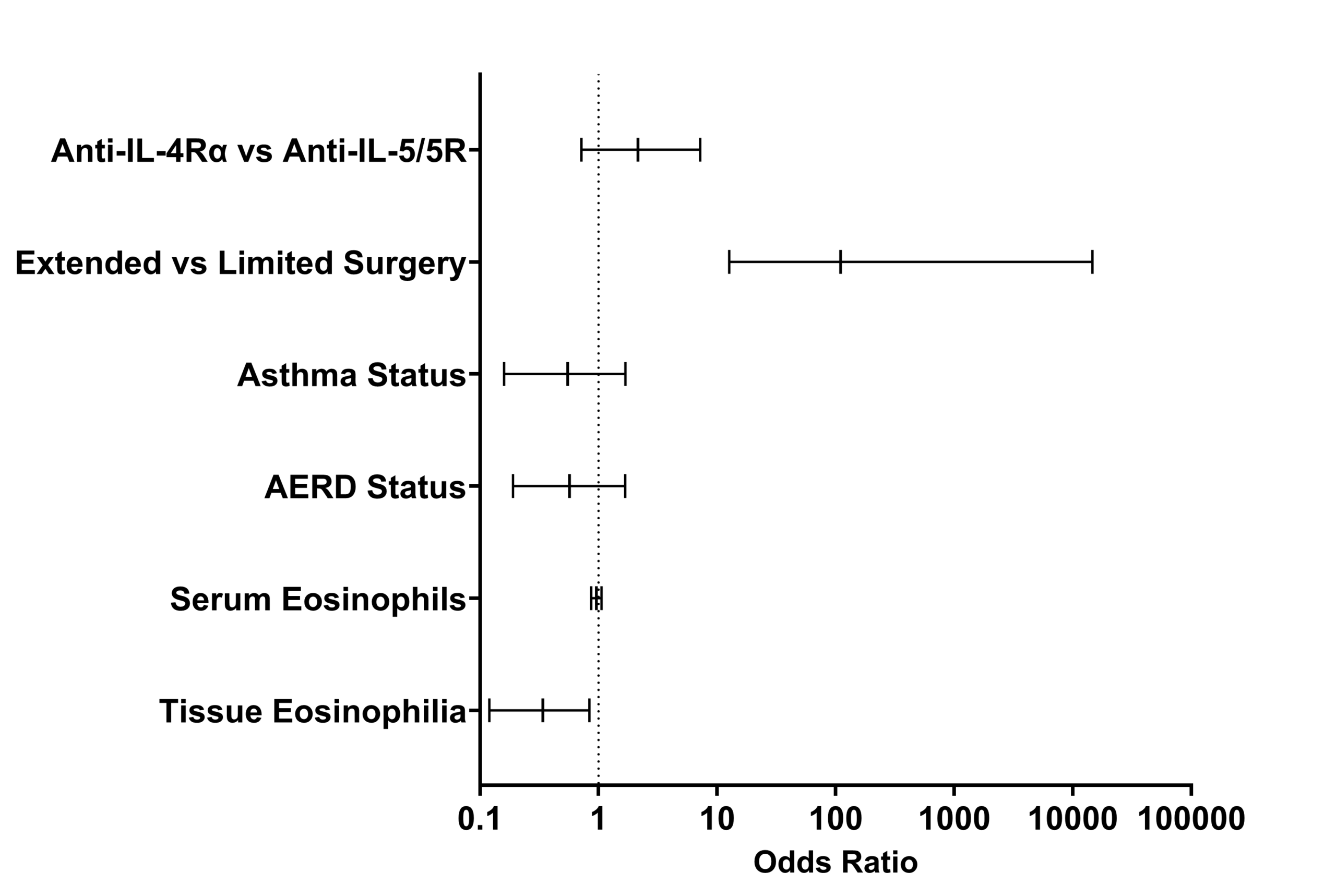
Campion NJ, Sacks P-L, Png LH, et al. Extent of sinus surgery is associated with disease control in biologic-treated type 2 dominant CRS. Int Forum Allergy Rhinol 2026. doi:10.1002/alr.70166
Four biologics registered for nasal polyps in Australia
Each targets a different point in the type 2 pathway, which is why we match the medicine to the patient — adult-onset disease with high blood eosinophils tends to do best on anti-IL-5; allergy-associated disease with higher IgE on anti-IL-4/13 or anti-TSLP. Funding is catching up with registration.
| Medicine | Target | Registered for polyps (TGA) | PBS funding |
|---|---|---|---|
| Mepolizumab (Nucala) | IL-5 | Yes | PBS for CRSwNP After surgery, on nasal corticosteroids ≥ 2 months, with persisting symptoms or polyps. Since April 2023. |
| Tezepelumab (Tezspire) | TSLP — upstream of IL-5, IL-4/13 and IgE | Yes | PBS listing expected Before the PBAC now. In its phase 3 trial: 89% fewer courses of oral corticosteroids, 98% fewer surgery decisions, early and sustained return of smell. Available privately, and free of charge through the manufacturer’s access program for patients who also have severe asthma. |
| Dupilumab (Dupixent) | IL-4 / IL-13 | Yes | PBS via severe asthma The strongest data for restoring smell. PBS-funded when severe asthma is also present; private prescription for polyps alone. Our usual switch when an anti-IL-5 medicine isn’t enough. |
| Depemokimab (Exdensur) | IL-5 — one injection every 6 months | Yes | Registered; PBS to come Twice-yearly dosing for patients who do well on anti-IL-5. |
| Omalizumab (Xolair) | IgE | Asthma indication | PBS via severe asthma Helps polyps in allergic patients treated for asthma. |
| Benralizumab (Fasenra) | IL-5 receptor | Asthma indication | PBS via severe asthma |
Status as at October 2026; we update this table as listings change. PBS biologics for polyps are prescribed by an ENT surgeon, respiratory physician, immunologist or allergist under the Section 100 program — this service prescribes and monitors them directly, so you are not referred on to another specialty to get started.
Not everyone responds the same way
In the Australian mepolizumab registry the response was “all or nothing” rather than gradual: most patients did very well, a minority did not, and none of 108 baseline measurements reliably predicted who. Patients with allergy were more often in the non-responder group. When an anti-IL-5 medicine does not control the disease, switching class (to an anti-IL-4/13 medicine) often does — and persisting disease on a biologic is usually not eosinophilic inflammation but residual tissue and mucus that surgery addresses.
Png LH et al., IFAR 2024;14:909–18 · Sacks P-L et al., IFAR 2025;15:602–7 · Australian Mepolizumab Registry for CRSwNP, 12-month data
What treatment involves
- An injection under the skin every 2 weeks (dupilumab), 4 weeks (mepolizumab, tezepelumab) or 6 months (depemokimab); most patients self-inject at home after the first dose.
- Daily corticosteroid irrigation continues — the biologic does not replace it.
- Review at 3, 6 and 12 months with a SNOT-22 score, endoscopy and a smell test; PBS continuation is applied for by us.
- Side effects are uncommon: injection-site reactions most often; eye inflammation with dupilumab in some; serious reactions are rare.
Questions patients ask us
What are biologics for nasal polyps?
Antibody medicines, given by injection under the skin every two to twenty-six weeks, that block one of the signals (IL-5, IL-4/13, TSLP or IgE) driving type 2 inflammation in the nose and lungs. They shrink polyps, restore smell in many people and cut the need for prednisone and repeat surgery.
Which biologics can I get for nasal polyps in Australia?
Four are registered for polyps: mepolizumab (Nucala), tezepelumab (Tezspire), dupilumab (Dupixent) and depemokimab (Exdensur). Nucala is PBS-funded today for severe polyps that have persisted after surgery and nasal corticosteroids. Tezspire is expected on the PBS soon. Dupixent is PBS-funded if you also have severe asthma, and otherwise a private prescription. If you have asthma as well, you may qualify through the asthma pathway even before a polyp listing — we check both.
What do biologics cost in Australia?
On the PBS you pay the standard co-payment per script — the same as any other prescription. Privately, the price is set by the manufacturer; some manufacturers run free-of-charge access programs while a PBS listing is pending, and we enrol eligible patients in them. We tell you the current position before you decide. Costs and Medicare →
Do I still need surgery if I’m on a biologic?
Usually yes — and the PBS requires prior surgery for mepolizumab. The data above show that remission on a biologic depends heavily on how well the sinuses were opened. Surgery and the medicine do different jobs.
What are the side effects?
Injection-site reactions are the most common. Each medicine has its own profile (for example, eye inflammation with dupilumab); serious reactions are rare. We review you at 3, 6 and 12 months with symptom scores and endoscopy.
Will my sense of smell come back?
For many people, yes, often within weeks of starting — smell is one of the most sensitive markers of response. Long-standing loss recovers less completely.
How long do I stay on it?
Treatment is continued while it is working. Whether some patients in long remission can stop or space out doses is an active research question, including in our registry.
Think you may qualify?
Please see your GP or specialist and ask for a referral. Your doctor sends it to us with the blood test and CT we need, so eligibility is checked before you arrive and you are seen in one visit. The specialist centre will contact you with an appointment.
Refer for biologic assessment
Send the FBC with eosinophils and the most recent CT with the referral; we check PBS eligibility, arrange anything missing and see the patient in one visit. The specialist centre contacts the patient with the appointment.
Who treats this

Prof Richard Harvey
Rhinology & skull base surgery
02 9360 4811
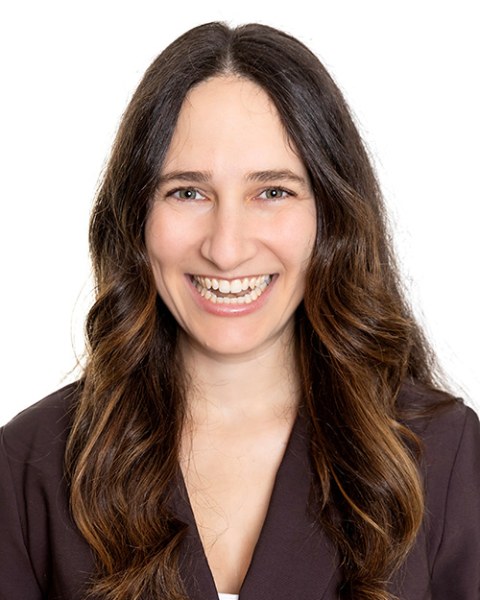
Dr Peta Sacks
Rhinology & skull base surgery
02 9101 2510
Rhinology and Skull Base Service, St Vincent’s Hospital Sydney. Both also consult and operate at Macquarie University Hospital.
For referring doctors
PBS mepolizumab needs: prior polyp surgery (or two specialists advising against), nasal corticosteroid ≥ 8 weeks, and persisting disease. Patients with severe asthma may qualify for dupilumab or tezepelumab now via the asthma criteria. Send FBC with eosinophils and the most recent CT — we do the rest.
Clinical content by Prof Richard Harvey and Dr Peta Sacks · Reviewed October 2026